creative ramblings & reverie

Showing posts with label Creative Nonfiction. Show all posts

Saturday, July 4, 2026

Today, My Soul: A Meditation in Images and Words


“My soul, be satisfied with flowers,

With fruit, with weeds even; but gather them

In the one garden you may call your own.” 

(Edmond Rostand, Cyrano de Bergerac)


Today, my soul is mourning many great things and some missing things that were once or seemed pure and innocent, without subtext.


Great, first—

• Langston Hughes, "Let America Be America Again"

(see here)

• Joseph Fasano, "July 4, 2026"

(see here)


Then innocent (and also great, in their own quiet way)—

• espadrilles


• laundry hung like prayer flags on an outdoor line


(see also Richard Wilbur, "Love Calls Us to the Things of This World")

• waking to innocence


• festive cakes and other festive fare


• tables set in a garden


• gardens of wonder (and their inhabitants) long ago


• gatherings of friends


• peace without sharp reminders of guilt


• joy and light, the same


• words that make us feel other than impotent


"We forget about the spaciousness

above the clouds

but it's up there. The sun's up there too.

When words we hear don't fit the day,

when we worry

what we did or didn't do,

what if we close our eyes,

say any word we love

that makes us feel calm,

slip it into the atmosphere

and rise?

Creamy miles of quiet.

Giant swoop of blue."

(Naomi Shihab Nye, "Over the Weather")


“You see, I want a lot. 
Perhaps I want everything 
the darkness that comes with every infinite fall 
and the shivering blaze of every step up.
So many live on and want nothing 
And are raised to the rank of prince 
By the slippery ease of their light judgments
But what you love to see are faces 
that do work and feel thirst. 
You love most of all those who need you 
as they need a crowbar or a hoe. 
You have not grown old, and it is not too late 
To dive into your increasing depths 
where life calmly gives out its own secret.”
(Rainer Maria Rilke, from Rilke's Book of Hours)


images:

Christie Cochrell

• espadrilles, Dome, slatki dome

• laundry, Colin Page, Laundry Lines

• waking, Dome, slatki dome

• festive cakes and other festive fare,

Buttercup Cakes

Dome, slatki dome

Dome, slatki dome

• tables set in a garden,

Dome, slatki dome

French Country Cottage

French Country Cottage

• gardens of wonder long ago,

Dome, slatki dome

• gatherings of friends,

Keimpe van der Kooi, Garden Party

Kristina Hovhannisyan, Cafe Street

Witold Wojtkiewicz, Garden Party

• peace, Marie Hamamoto Photography

• joy and light, Ethan Hoover, Unsplash


Monday, May 11, 2026

"mend"


What does it mean to me, this "mend"?


I think of thread and needle and a quiet, patient hand (or Benedick's "Serve God, love me, and mend" to hearten Beatrice).  And I have become captivated by the art of mending—originally Japanese of course—sashiko, visible mending.  Not invisible, as once it was, somehow puritanical.  Not trying to hide a fault or flaw, but enhancing the damaged cloth, making imperfections beautiful and part of a new whole.


images:  The Work+Shop, Sashiko Visible Mending

Karen Stevens, Tatter (past events, Narrative Mending, a virtual class)


Tuesday, November 18, 2025

Balconies


“Someday when peace has returned to this odd world I want to come to London again and stand on a certain balcony on a moonlit night and look down upon the peaceful silver curve of the Thames with its dark bridges.”

—Ernie Pyle


“The sparrow that is twittering on the edge of my balcony is calling up to me this moment a world of memories that reach over half my lifetime, and a world of hope that stretches farther than any flight of sparrows.”

—Donald G. Mitchell


(above,) This lovely balcony in Palma de Mallorca, bringing memories of peace and hope and other worlds.


And this, (below,) in San Juan Bautista, holding a small flight of angels—if fewer than on that famous pin.


And whimsey in Paris one year, a flight of chefs.


And this, and this.  Verona and a very famous balcony.  Flights of fancy.


"She wasn't doing a thing that I could see, except standing there leaning on the balcony railing, holding the universe together."

—J.D. Salinger


images:  Christie B. Cochrell


Sunday, November 16, 2025

Flames of Hope


I’m thinking of the powers of light, which include Sarastro, child spirits and flutes, the wonderful animal puppets of Julie Taymor!  Mozart, behind and inside all of that. 


And caravans, in their historical meaning—pilgrims and camels and banners of faith and fellowship.  "Allowing for the exchange of goods [salt and textiles; stone, spices, copper, gold] and ideas [in words] across long distances."  A group of people journeying together, most often through desert or hostile regions.


All carrying shimmering flames of hope.


images:  The Catalan Atlas; Shutterstock:  Camel caravan in Souq Okaz Festival


Sunday, August 3, 2025

Journeys by Water


Later this week (after a journey by air) I'll take a harbor cruise on Lake Superior, a place I've never been before, though I've just learned that the lake water flows eventually and most circuitously into the St. Lawrence River, which I have seen and noted in Quebec, and that its name in Ojibwe is gitchi-gami, flowing in its turn into Longfellow's poem "The Song of Hiawatha" which I came across in school ages ago.

The flow of words takes me (circuitously too) back into letters and journals, which find me staying in "a green-roofed attic high above the St. Lawrence River in Vieux-Québec," seeing "the blue copper roofs above the St. Lawrence River in old Quebec," and reading The Cleaner of Chartres, "which sent me off on a quest after porc aux pruneaux—which morphed into chicken with prune and mustard sauce, which I'm making for tonight's dinner.  Next time it will be lamb tagine with prunes and apricots.  I first found prunes as an ingredient in meat dishes and pies in old Quebec City, as I was walking around checking menus, high above the St. Lawrence River."

In June 2012 I wrote "I do love being on the water.  One of my favorite ways of exploring a new place is to take a boat ride around it—whether an architecture river cruise in Chicago, a ferry to Tiburon or Sausalito with views of the Golden Gate Bridge and the diminished San Francisco skyline, a cruise on the slow green river below Durham Cathedral, a ferry from Boston down to Cape Cod, a kayak trip down the irrigation ditch in Kohala, a ride around the San Juan Islands or to Victoria, BC, a hydrofoil up Lago di Como or from Crete to Santorini, a rowboat on Wisconsin’s Bone Lake, or a paddlewheeler down the Mississippi from New Orleans."


And back in August 2009, just looking out at boats, "It’s good to be back in Chicago, one of my favorite big-cities-away-from-home (along with Boston’s Back Bay, midtown Manhattan, and Washington, DC up near the cathedral and zoo).  Despite the early hour, it’s pleasant to walk to work along the green river, under a lofty drawbridge, with architecture tour boats moored quietly along the opposite bank, impressive buildings rising all around.  To see the reflection of sky and clouds in a new hotel, on my way to the Corner Bakery for decaf espresso and croissants.  Then later in the day, sprung from the windowless, timeless exhibit hall, it’s reviving to see the play of fireboats and water taxis on their journeys to and from the lake, to sit with sandwich and notebook watching the wakes erasing as they go and the contemplative sparkle of sun.  And when the night comes on again the enchantment of lights reflected, multiplied, and with them unarticulated yearnings for things past or out of reach, the far places in me I long for and am always already leaving again."


And finally, further back and much farther away, sometime in the late 1980s, I noted the details of a journey by water among many in Greece, this from Santorini:  "There is room for only one boat to dock at the volcano, so the three or four that came after just tied up to the first and we disembarked by being handed across all the boats in turn—a bridge of boats.  After climbing we sailed around to the other side of the New Burned Island and went swimming off the boat, in thermal waters.  There was a small white church in the cove, and above it a cave with an outhouse in it overrun with goats."


All this especially luring, probably, because my birthplace was landlocked, and water so scarce there. Boat journeys came to seem the stuff of fairy tales.


image:  Henry Holiday, Sappho and Phaon

Ashmolean Museum, photo by Christie Cochrell


Thursday, July 17, 2025

One Letter at a Time


Changing the world, even one letter or two at a time. 


I get the idea while sitting in the garden at the medical clinic across the road from our scholarly press, considering dappled tree bark and lanky winter rosemary.  I’m in a sad and gripey frame of mind, and trying very hard to escape it.


Thinking of one who sidles in, unpleasantly, but changing him to one who made saddles, my gentle grandfather, working with leather in Flagstaff.


Thinking “I cannot bear . . .” but then, instead, “Oh yes I can, bear”—responding to the little black bear, oso negro, scented with juniper, which hung in my early childhood on the gin bottle from Juarez in the dictionary room, the treasury of words.


Brash becomes the softer brush; hiss becomes hush, or wish, or even listen (o list!).  Thrash becomes a thrush—a wood thrush or a hermit thrush, plump and with tawny legs, or even a blue whistling thrush, found in the Himalayas with the snow leopards and dancing prayer flags.  Grind becomes a jaunty grin, or rind—of melons or of oranges, tangerines.  And even gruel, the flavorless and nearly empty bowl of poor Oliver Twist, becomes the Grail, holy and sought after by whole armies of knights. 


And so it goes, changing. 


(from my Writing with Light blog, Jan. 13, 2015)


image:  Christie Cochrell, Treviso


Saturday, July 12, 2025

Giving Way


The first picture I saw this morning was taken at Hovenweep, six prehistoric villages on the border of Colorado and Utah, and showed the “the moon giving way to the morning sun.” 


In my sleepy state, on the border of dreaming and waking, before my decaf Sumatra and warm croissant with olallieberry preserves, I started wondering about the idea of giving way—my dreamy morning hours giving way to rain and midday obligations, winter beginning to give way to spring, and everywhere, examples of this continuity which makes up life. 


The meaning of it, giving way, is ceding, passing the baton or the torch, letting the other have its turn. 


But beyond that, giving way is allowing passage, enabling a journey, leading to or even carrying. The stairs give way.  A train gives way, as does a horse, a mule descending the Pololu Valley, or a donkey climbing the steep rise of Santorini with its sheer white cliffs.  A wheelchair, graciously, gives way to those whose only way is that. 


And in a further sense of that, the spritual, it’s causing or inspiring a creative path.  Claude Monet wrote “I perhaps owe having become a painter to flowers.”  The flowers by their very nature gave way to Monet’s paintings of them, which in turn give way to the viewer’s pleasure, sharing the flowers. 


The meaning of that first moon and sun “giving way” is yielding, but that, too, has several sides.  Yielding as in letting someone else go ahead of you, as in losing yourself to temptation (both implying a kind of lessening of self, a ceding of one’s place in the landscape or moral world); but also as in producing—offering—yielding fruit or flowers or some other rich and generous bounty.  Giving of yourself to others, to the world, with natural and voluntary grace.  Not losing anything, but gaining everything. 


Finally, the giving way reminds me of the Navajo Blessing Way and Beauty Way, another way of healing and of finding harmony. 


(from my Writing with Light blog, Feb. 7, 2015)


image:  Hovenweep National Monument

Creator: NPS/Chris Wonderly 839447496169876 

Copyright: Public Domain

Monday, July 7, 2025

Grandmother's Hands


“Why does she have a grandmother’s hands?” a friend’s young daughter asked of me many years ago, hurtful in the unwitting way that young children can be. 


Sun damage I could have said; my having grown up in the high desert of New Mexico, holding the reins of palomino horses on rocky June trails, catching minnows in mountain streams.  My not painting my nails, maybe she meant—because they chip (except in Italy when I drank frothy steamed milk several times a day in earthy calcium-rich cappuccino) and break while planting blue lobelia, chopping garlic and onions for guacamole, playing Chopin nocturnes rather badly, stumbling on the notes.  Once playing jacks, gathering agates, figuring algebra on a chalkboard.  Washing dishes at dusk, feeling the grace of smooth-lipped bowls held in both hands, making them clean.  My never being able to get enough lotion to soak in, scented with lavender or almond, cherry blossom from the south of France or my favorite Bert’s Bees milk and honey, or discontinued sandalwood. 


But I love this hand I photographed in a garden in Saratoga, weathered and full of life.  I should be grateful to have hands as worn as this, a pilgrim’s hands, prayerful hands, practical hands, unpampered hands which gather marjoram and sage and put out water for the birds, which write on paper and computer keys always wherever in the world I am and that way talk to friends and gather stories and history and lives through thoughts and scoop up joy and gratitude with insatiable greed. 


“What do you do with this hand?” a massage therapist asked me one December, surprised that it was so tired and tight.  I was surprised in turn, thinking “well, live.”  What don’t I do with it?  "I am a writer," I told her.  It seemed so obvious. My hand is what I am. 


So in the end I couldn’t ask anything better than to have the hands of a grandmother, of my own grandmother and grandfather too, the hands which made Orange Pekoe tea and worked the leather of saddles, the hands that held me, showed me love.  The hands of strangers which stroke saffron on a forehead, which carve santos, which stitch up wounds, which offer shadowplay in firelight, read Braille, string pearls, polish a skate blade, plug a dike.  The hands in which a tarnished coin might lie, reading heads/tails, telling my own or someone else’s fortune, while the lines of my palm show the way. 


(reposted from Writing with Light, April 2015)


image:  Christie Cochrell, Hand, Villa Montalvo


Monday, April 7, 2025

Torre del Lago


Another memorial sketch of mine, “Torre del Lago (A Triptych),” bits of creative nonfiction often reworked over the years, has been published in the Spring 2025 issue of Allium, A Journal of Poetry & Prose—a print edition which can be ordered from the publisher.


The triptych includes Lucca, Italy; Santa Fe, New Mexico/Nagasaki, Japan; and Hawaii's Kona and Kohala Coasts.  (Unlikely—but then so has been my life!)  All of the threads of this are tied together by Giacomo Puccini the composer, and his transportative music (especially Madama Butterfly.


It begins (though not where it really began)

"One late October afternoon, some twenty years after my father’s death, we take the train from Lucca to Torre del Lago.  Arriving finally at the station on the lake where Giacomo Puccini's villa stands, where he wrote the music that has been for me since childhood the touchstone of beauty and sorrow.  The villa where, I wrote some twenty years ago, they found eight phonograph records with labels in Japanese."


And ends (much earlier) with yellow fishes in the blue-black water of the Kona Coast—after a long, time-traveling  journey in between.


Images:  Villa Museo Puccini

Yellow Tang


Wednesday, March 26, 2025

Gardens of Longing


Late in February gardens (at least in California) began showing new growth, and green sprouts, and our wonderful local Catamaran Literary Reader published a celebration of gardens of all sorts—Catamaran Vol. 13, 1: Special Garden Edition, 2025, Issue 47—

"In our Special Garden edition, we invite you to enter our pages consisting of literary works with settings that span from public gardens to imaginary gardens, themes of flowers, plants, and the organic world, in a narrative accompanied by a range of visual artworks exploring gardens from landscape and still life paintings to abstraction and realism." 


In my creative nonfiction meditation included in this special collection, "Gardens of Longing:  A Memoir in Stolen Cuttings, Hoarded Seeds," I hope I show how the gardens we plant for ourselves are a hopeful, wistful, always nostalgic mingling of longing and belonging, comprising the places and their essences we’ve lost, or on various journeys found.


"I cultivate a garden of stolen plants, the way the words of poems and stories in my rag-tag notebooks also make me what I want to be.  Cultivate, I see, comes from colere—also meaning inhabit.  Like sea creatures which inhabit others’ shells I borrow and then live inside a casing of inspiriting plants and trees for dapple and for shade, and tuck old worn stone figures among them, companions of my muse. This thieving reprehensible, perhaps, but something I can’t help.  It’s essential to who I am, and the telling of that.  I acquire plants the same way I buy books:  believing each will give me finally exactly what I long for.  My belonging and my home."


Here, in my always ephemeral garden in Santa Cruz, I find

". . . the salvias and herbs and weathered stone, upstart yarrow, geraniums in every shade of pink, a little St. Jerome with his lion and book—all [these] elements assure me that this, my seat under the lichened pine with just a scrap of ocean view, a passing dog, a junco searching through the tangled grass, and all those cherished scraps of other times, elsewhere, is exactly where I belong."


I'm honored to have this rumination featured on the Catamaran website, and it can be found here.


image:   Andrea Johnson, cover artist


Wednesday, November 15, 2023

Out with Lanterns


It makes me so happy to see this long, rambling meditation finally published—and with photos I took (New Mexico, Oxford, Kew Gardens) nicely fitted in by Sybil, making it a true hybrid.  Prose, poetry, and images all mine, and me.  A kind of screenshot of who/where/why I am at this juncture.  Started towards the end of lockdown, when it was dawning on me how stir-crazy I'd become, after so many years of traveling more or less whenever I wanted, and having to worry that I'd never in my life get to travel again; and finished/edited as I was getting ready to travel again (yes, really!) to Santa Fe—time-travel back, for my 50th class reunion.  Getting ready to babble on about (in twenty words or less) what I'd been doing all that time, and where I have come out.


So here we are!  


The format kind of rambles too, which seems appropriate.

(And I learned after coming home that a Santa Fe friend named Sybil had just passed away—so a tribute of sorts, as well.)


One small excerpt from towards the end:

I am still sad, far from England and all the other far places I love, missing my life as Clarice Lispector describes it perfectly—

“I miss everything that marked my life. ... I miss 

the things I lived and the ones I let go. ... 

How many times I want to find I don't know what... 

I don't know where... To rescue something I don't 

know what it is or where I lost it.”

         But I have understood, putting the recent feeling of loss down in words, in the same notebook that now holds the little beach, the cardamom, the dogwalkers, the Sterling Silver “wishy-washy” ink I find today along with letters from Emily Dickinson translated charmingly into Italian, that I’m still me, enduringly, even at this remove.  Still weird as weird can be.  That the whorls of labyrinths, like fingerprints, are uniquely and indelibly mine.


Images:  On Museum Hill, Christie Cochrell

             Cycladic Figurines, The Ashmolean, Christie Cochrell

Monday, July 25, 2022

Sacred Space: or, Sitting a Spell


This meditative essay has been published in MockingOwl Roost (Volume 2, Issue 3:  Introspection), and is surely nothing if not introspective.  I felt extremely lucky to have found the space inside this discombobulated year to dwell from time to time in a lovely cerebral realm, lofty and light and well above the fog-line, and was happy to be shaping a gauzy blue and silver tissue of ideas in defiance of my off-and-on-again dull fuzzy-headedness.  The finished piece feels almost like things I wrote in graduate school, when I was fully in my element.


At some point while sitting a spell, I came across this poem about quiet power that seemed to beautifully sum up the power I was summoning (or hoping to) in my meditations.


The Quiet Power

I walked backwards, against time

and that’s where I caught the moon,

singing at me.

I steeped downwards, into my seat

and that’s where I caught freedom,

waiting for me, like a lilac.

I ended thought, and I ended story.

I stopped designing, and arguing, and

sculpting a happy life.

I didn’t die. I didn’t turn to dust.

Instead I chopped vegetables,

and made a calm lake in me

where the water was clear and sourced and still.

And when the ones I loved came to it,

I had something to give them, and

it offered them a soft road out of pain.

I became beloved.

And I came to know that this was it.

The quiet power.

I could give something mighty, lasting,

that stopped the wheel of chaos,

by tending to the river inside,

keeping the water rich and deep,

keeping a bench for you to visit.

– Tara Mohr


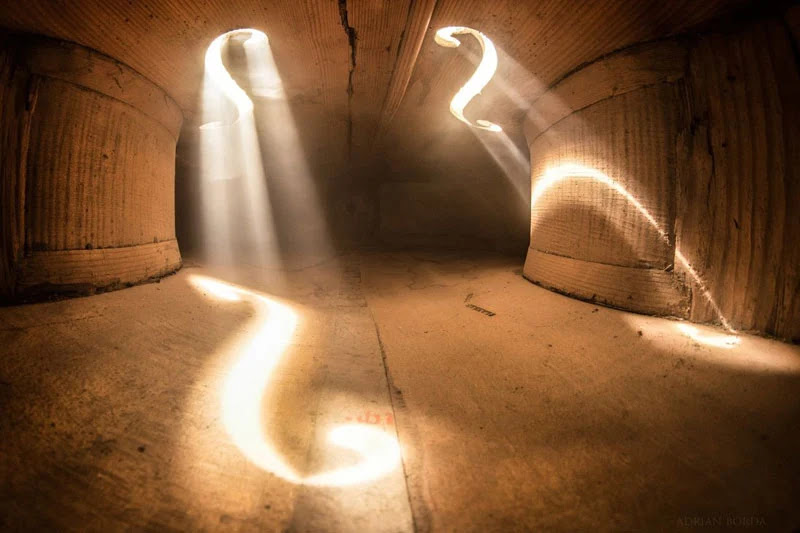
image:  Antelope Canyon, Arizona (reminding me as well of the quiet and sacred space—humming with possibility—that has been photographed by Adrian Borda inside cellos)


Saturday, September 5, 2020

At-Home and Far-Away


Birdland Journal has published my strange non-fiction piece encapsulating these strange times, in their Summer 2020 issue, Writing in the Time of the Global Pandemic.


My piece, "At-Home and Far-Away," was conceived with Zoom and its little windows in mind.  Those of us who watch Zoom strictly for the opera choruses with each member at home somewhere likely have a different vision of it than those who use it to talk to just a couple of others.  To me, it seems a mosaic of dozens of little tiles from around the world—and my nonfiction piece is more or less the same, little vignettes from various places and years, here and elsewhere, fitting together however loosely as a mosaic of the last few months, the stories triggered by household objects enticing my thoughts far and wide.  


My research tells me that in Zoom terms it's "gallery" rather than mosaic, and not windows or tiles but participants or thumbnails.  But that's the idea, and my text would ideally be in three columns to more closely carry out the concept (if that didn't just distract from the sense of the language).


image:  David Wakely, Prayer Flags, Birdland Journal


Friday, September 6, 2019

Show Me the Bust of Marcus Agrippa


Lowestoft Chronicle has published the (a)gripping story of one of my foreign quests, on the verge of the new Millennium, in their Fall 2019 issue, #39.
         And so, with fall coming, with trees and late afternoon light yellowing, turning to gold (no matter if it's fools'), let us travel to Rome.

         "But after all, Agrippa is not here.  The Etruscans are here—their finely granulated gold jewelry, their etched bronze mirrors—those things you’ve seen in the art books, and roomfuls more, laid out in all their mystery and splendor.  And in the garden there are heavy-laden lime trees, and a small café where you can sit and rest your blistered feet and imagine that you have turned the clocks back and returned to summer for a little while.  All that is here, at the Museo Nazionale di Villa Giulia, and for only 8000 lire (a single stroke of the delightful triple-zero key which I’ve fallen in love with on Italian ATM machines); but the marble head of Marcus Agrippa, builder of ancient Rome and second-in-command to Augustus Caesar, which we have come so many hellish miles to see, is not here. “We are Etruscans,” the old museum guard with his beetling brows and military bearing says dismissively."


image:  Vatican Museum - Hall of Busts, Saint Mary's Press

Thursday, July 18, 2019

Forest Avenue


In the Spring 2019 Issue of Birdland Journal, with the theme "A Matter of Character," pieces published include my creative nonfiction work "Forest Avenue," as well as wonderful stories by my good friends and long-time writing colleagues Rick Trushel ("Electric Twilight") and Jeanne Althouse ("Fallen Star").

Here's a brief taste of the madeleine that sends me back to that delightfully eccentric place I lived once, once upon a time:


Every year again, on Easter Sunday, the neighborhood children came in their new finery, flowered cotton dresses, ankle socks, and patent leather shoes, or little navy shorts and clean buttoned shirts, to hunt for Easter eggs in the huge, rambling yard across the street (Forest Avenue, broad as a boulevard), next door to the private nursing home where every morning the old man would come out bundled up and stand at the curb and holler at the street for maybe ten minutes, holler and holler, then go inside again. One by one, holding parents by one hand and little painted buckets or baskets by the other, they would come and lift the latch of the waist-high gate, vanish into the yard that was like an English cottage garden.


image:  Sylvan Beach House